
 Image 1 of 1
Los Alpes is a tiny highland community of roughly 280 people with a fierce, generations-deep commitment to protecting the natural world that sustains them. Every producer here sets aside sections of their land as untouchable forest; native plants are deliberately left intact at springheads and water sources, and livestock are kept out of those sensitive zones. That care is practical and moral — the people of Los Alpes know climate change is already reshaping their lives, and they prepare conservatively because small mountain communities feel the effects sooner and harder than most.
Coffee is the heart of local farming. Plots lie between about 1,750 and 2,000 meters above sea level, producing beans nurtured by cool mountain air and long maturation. Farmers intercrop coffee with shade trees — commonly avocado and lemon — that provide canopy, additional food, and income while maintaining biodiversity. Livestock are raised free-range: chickens, pigs, and guinea pigs move through the system in ways that close nutrient loops. Manure feeds the soil; animals consume crop residues and, in turn, help sustain the integrated farm ecosystem that keeps soil fertile and trees healthy.
The landscape of Los Alpes doesn’t stop at the coffee belt. The community’s mountains climb dramatically, reaching up to 3,500 meters above sea level — a local topography dramatic enough to inspire the name Los Alpes. That elevation gradient creates distinct microclimates, water sources, and habitats that the community deliberately protects. Their land stewardship is both a response to immediate needs (clean water, fertile soils, shade for coffee) and a long-term strategy against climate pressures.
What stands out in Los Alpes is the whole-farm thinking: conservation areas, protected headwaters, shade-grown coffee, fruit trees for diversification, and free-range animals contributing to nutrient cycling. It’s a resilient, small-scale model that balances production with protection — a practical example of how traditional practices and ecological awareness can coexist to sustain both people and place.
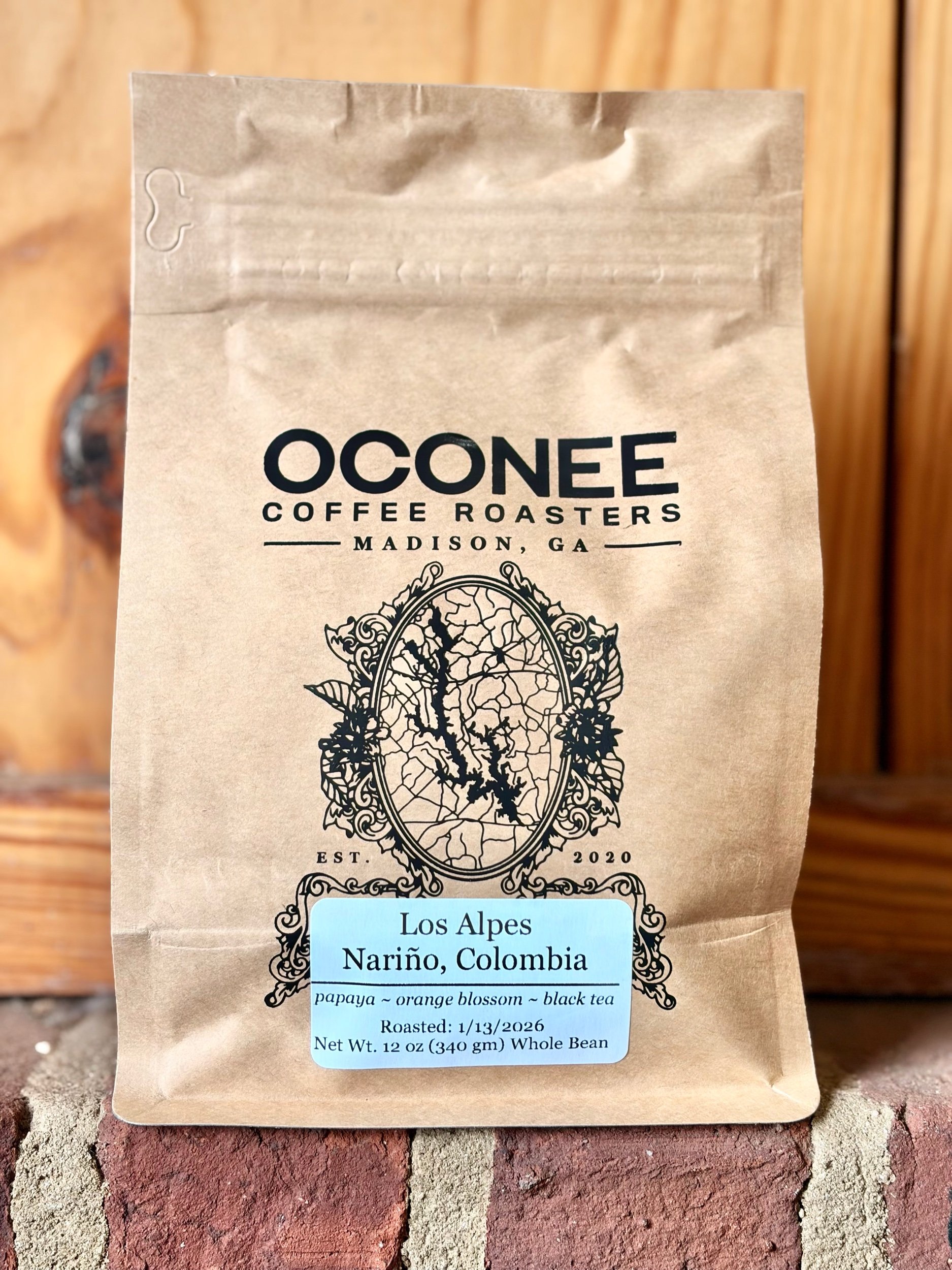
Tasting notes: papaya, orange blossom, and black tea.
Los Alpes is a tiny highland community of roughly 280 people with a fierce, generations-deep commitment to protecting the natural world that sustains them. Every producer here sets aside sections of their land as untouchable forest; native plants are deliberately left intact at springheads and water sources, and livestock are kept out of those sensitive zones. That care is practical and moral — the people of Los Alpes know climate change is already reshaping their lives, and they prepare conservatively because small mountain communities feel the effects sooner and harder than most.
Coffee is the heart of local farming. Plots lie between about 1,750 and 2,000 meters above sea level, producing beans nurtured by cool mountain air and long maturation. Farmers intercrop coffee with shade trees — commonly avocado and lemon — that provide canopy, additional food, and income while maintaining biodiversity. Livestock are raised free-range: chickens, pigs, and guinea pigs move through the system in ways that close nutrient loops. Manure feeds the soil; animals consume crop residues and, in turn, help sustain the integrated farm ecosystem that keeps soil fertile and trees healthy.
The landscape of Los Alpes doesn’t stop at the coffee belt. The community’s mountains climb dramatically, reaching up to 3,500 meters above sea level — a local topography dramatic enough to inspire the name Los Alpes. That elevation gradient creates distinct microclimates, water sources, and habitats that the community deliberately protects. Their land stewardship is both a response to immediate needs (clean water, fertile soils, shade for coffee) and a long-term strategy against climate pressures.
What stands out in Los Alpes is the whole-farm thinking: conservation areas, protected headwaters, shade-grown coffee, fruit trees for diversification, and free-range animals contributing to nutrient cycling. It’s a resilient, small-scale model that balances production with protection — a practical example of how traditional practices and ecological awareness can coexist to sustain both people and place.
Tasting notes: papaya, orange blossom, and black tea.